The LinkedIn Social Selling Index: What It Is and How to Improve It


If you have ever poked around LinkedIn's sales tools, you may have run into a number called your Social Selling Index. It sounds official and a little mysterious, which is exactly why people fixate on it. This is a plain walk through what the score is, what it actually measures, how to check yours for free, and how to move it without turning your LinkedIn presence into a chore.
TL;DR: what is the LinkedIn Social Selling Index?
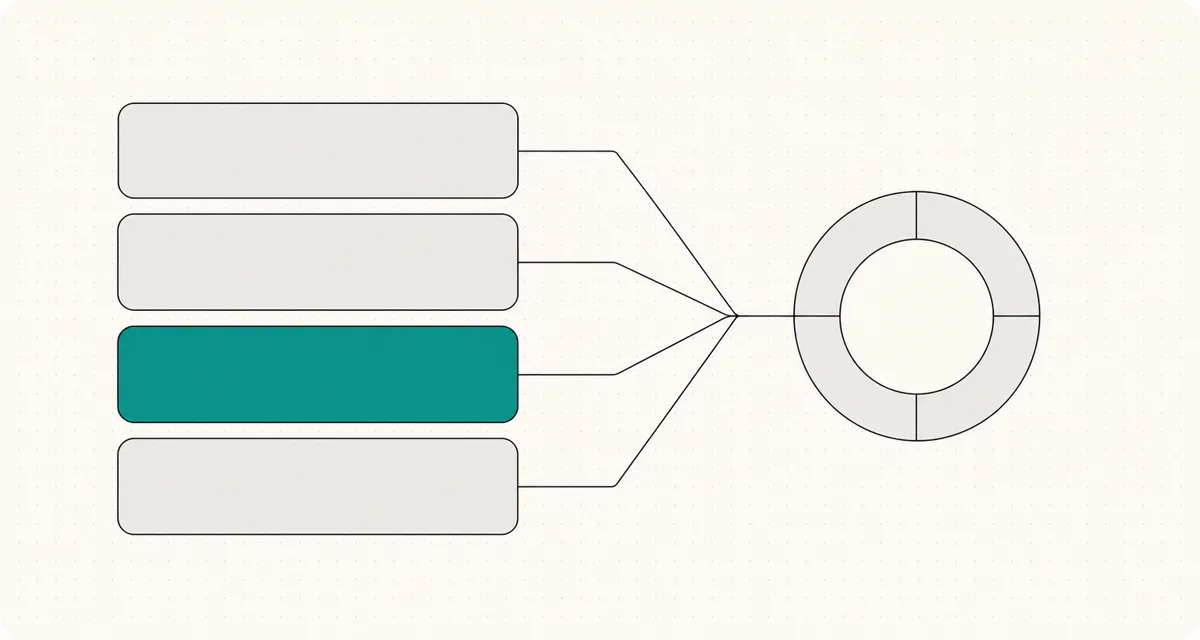
The LinkedIn Social Selling Index (SSI) is a score from 0 to 100 that LinkedIn calculates for your profile. It is built from four components, each worth up to 25 points. Add the four together and you get your total. The score started life as a Sales Navigator metric, but you do not need a paid seat to see it. Any LinkedIn member can check their own SSI for free. LinkedIn updates the number daily, so it shifts as your activity and profile change.
That is the whole definition. It is not a secret ranking or a limit on who sees your posts. It is a summary of a few behaviors LinkedIn considers healthy for a professional using the platform, rolled into one figure.
The four parts of your SSI score
The reason a single number can feel confusing is that it hides four separate things underneath it. Understanding the parts is the fastest way to understand your own score, because a low total almost always traces back to one or two weak pillars rather than all four.
Establish your professional brand
This part rewards having a complete, credible profile and publishing content. Think of it as LinkedIn asking whether someone landing on your profile would understand who you are and what you know. A filled out headline, a real photo, an about section that says something, listed experience, and posts that show your thinking all feed this pillar. It is one of the two components you influence most directly through what you publish.
Find the right people
This part is about using LinkedIn to actually locate the people who matter to your work. Searching, viewing relevant profiles, and using LinkedIn's tools to identify prospects or peers all count here. For salespeople this maps neatly onto prospecting. For a consultant or founder, it is closer to research: finding the clients, partners, and voices in your field rather than accepting whoever happens to show up.
Engage with insights
This part measures whether you take part in the conversation instead of just watching it. Sharing useful content, commenting with something real, and interacting with posts in your industry all move this pillar. Like the professional brand component, it is heavily driven by publishing and by showing up in other people's comment sections in a way that adds something. This is the second of the two pillars that consistent posting affects most.
Build relationships
This part looks at whether you are growing and strengthening a network that fits your goals. Connecting with the right people, building genuine reach, and staying in contact over time all feed it. The emphasis is on relevant relationships rather than a huge follower count. A tightly connected network in your field tends to serve this pillar better than a random pile of connections.
How to check your LinkedIn SSI score
Checking your score takes about thirty seconds and costs nothing. Sign in to LinkedIn, then go to:
https://www.linkedin.com/sales/ssi
You will see your total out of 100 at the top, along with a breakdown of the four components so you can tell which ones are strong and which are dragging. LinkedIn also shows how you compare to people in your industry and network, which is useful mainly as context rather than a target. Because the number refreshes daily, it is worth checking once, noting where your weak pillars are, and then coming back in a few weeks to see the trend rather than staring at it every day.
What is a good SSI score?
Here is the honest answer: LinkedIn does not publish official thresholds for what counts as a good SSI. There is no confirmed line where you cross from bad to good. You will find figures floating around online that claim a certain number is strong, but those are not official LinkedIn benchmarks, so treat any specific target you see with caution.
A few things are true and more useful than a magic number. Higher is generally better than lower. The score is relative, since LinkedIn shows it against your industry and network rather than as an absolute grade. And the component breakdown tells you far more than the total does. A score that is being held back by a weak profile is a very different situation from one held back by never engaging, even if the totals match. So instead of asking whether your number is good, ask which of the four pillars is weakest and whether the reason makes sense for how you actually use LinkedIn.
How to improve each part of your SSI
The good news is that the actions that raise your SSI are mostly things worth doing anyway. Here is how to approach each pillar without gaming anything.
Establish your professional brand. Start with the basics: a clear headline, a real photo, and an about section that explains what you do and who you help. If you want a stronger headline, our LinkedIn headline generator can help you draft one, and the LinkedIn profile analyzer will flag gaps worth fixing. Beyond the profile itself, this pillar is driven by publishing. Posts that share how you think, what you have learned, and what you are working on are what tell LinkedIn, and more importantly your audience, that there is a real person and a point of view here.
Find the right people. Spend a little time each week actually searching for the people who matter to your work: potential clients, peers, and the people whose posts you respect. View their profiles, follow the ones worth following, and pay attention to who is active. You are not trying to hit a quota. You are building a clearer picture of your corner of LinkedIn.
Engage with insights. Comment on posts in your field with something you actually think, not a thumbs up emoji. Share content that is genuinely useful to your audience and add a sentence about why it matters. This pillar rewards being a participant. It also happens to be one of the best ways to become visible to people who have never heard of you, since a thoughtful comment on a busy post can be seen by more people than a post of your own.
Build relationships. Connect with the people you meet through your searching and engaging, and add a short note about why. Stay in touch with the connections who matter instead of collecting names. A network of a few hundred relevant people you actually interact with will do more for this pillar, and for your business, than thousands of strangers.
Notice the pattern. Two of the four pillars, establishing your brand and engaging with insights, are driven mostly by publishing content consistently. That is where most people stall, not because they lack ideas but because writing a good post every week is hard to keep up when it is one more thing on the pile. This is the part we built WriteHero for. It learns your voice from your real LinkedIn post history and helps you turn a rough thought into a post that still sounds like you, so posting consistently stops being the bottleneck. The point is not to feed the algorithm. It is to make the useful habit sustainable.
If you want to understand what happens after you post, our piece on LinkedIn impressions breaks down how reach actually works.
Does SSI actually matter?
Somewhat, and it is easy to overrate it. The Social Selling Index is a directional signal. It bundles a handful of healthy behaviors into one number so you can glance at it and see roughly whether you are showing up on LinkedIn in a professional way. A rising SSI usually means you are keeping your profile in shape, publishing, engaging, and building a real network, and all of those are good things.
What it is not is a goal in itself. Nobody signs a contract because your SSI is high. Clients hire you because your posts were useful, your profile was credible, and you showed up in the conversation in a way they remembered. The score is a byproduct of that, not the cause. If you chase the number directly, you can end up doing hollow versions of the behaviors, mass connecting, spraying low effort comments, and posting for the sake of posting, which helps nobody including you.
So use the SSI the way it is meant to be used. Check it, notice which pillar is weak, and let that point you at a habit worth building. Then go build the habit and let the number follow.
Where to start
If your score is being held back by the brand and engagement pillars, and for most people it is, the fix is not chasing a score. It is publishing useful posts in your own voice, consistently, over time. That is the hard part, and it is the part that actually compounds.
If keeping up a posting habit is where you get stuck, that is exactly what we help with. Try the WriteHero LinkedIn post generator, tune up your profile with the headline generator and profile analyzer, and let your SSI take care of itself.
Choose your next step
Frequently asked questions
What is the LinkedIn Social Selling Index?
The LinkedIn Social Selling Index (SSI) is a score from 0 to 100 that LinkedIn calculates for your profile. It is made of four parts worth up to 25 points each: establishing your professional brand, finding the right people, engaging with insights, and building relationships. LinkedIn updates the score daily.
How do I check my LinkedIn SSI score?
Sign in to LinkedIn and go to linkedin.com/sales/ssi. Any member can view their own score for free. The page shows your total out of 100 and a breakdown of the four components so you can see which parts are pulling your number up or down.
Is a high SSI score actually worth it?
A high SSI is a directional signal, not a goal in itself. LinkedIn does not publish official benchmark thresholds, so there is no confirmed number that counts as good. The habits that raise your SSI, like keeping a complete profile and publishing useful content, are worth building for their own sake.
How can I raise my Social Selling Index?
Complete your profile, publish content consistently, engage thoughtfully with posts in your field, and keep growing a relevant network. Two of the four pillars, establishing your brand and engaging with insights, are driven mostly by posting good content regularly, so a consistent posting habit moves the score more than anything else.
How often does LinkedIn update the SSI score?
LinkedIn updates the Social Selling Index daily. Because it moves every day, it is better to watch the trend over a few weeks than to react to a single day's number.
Related guides
Browse Growth GrowthJuly 3, 2026
LinkedIn Content Strategy: A Planning and Review System
A manageable content strategy for consultants and founders: define the audience, choose substantiated topics, verify publication and review relevant responses.
Read more WritingOctober 3, 2026
How to Schedule LinkedIn Posts and Find Scheduled Posts
A practical guide to LinkedIn's native scheduler, including where scheduled posts live, how to edit them, and what to check when the clock or a post is missing.
Read more GrowthJuly 4, 2026
Best Time to Post on LinkedIn: Find Your Audience's Window
Use timing studies as starting hypotheses, not a schedule to obey. Pick two windows in your audience's timezone, compare similar posts at the same age, and keep the slot that supports your goal.
Read more
See your first post, in your voice
Paste your LinkedIn profile and WriteHero drafts a post that sounds like you. See it before you sign up, no login needed. Create an account later to save the draft.