LinkedIn Summary Examples: 10 About Sections by Role

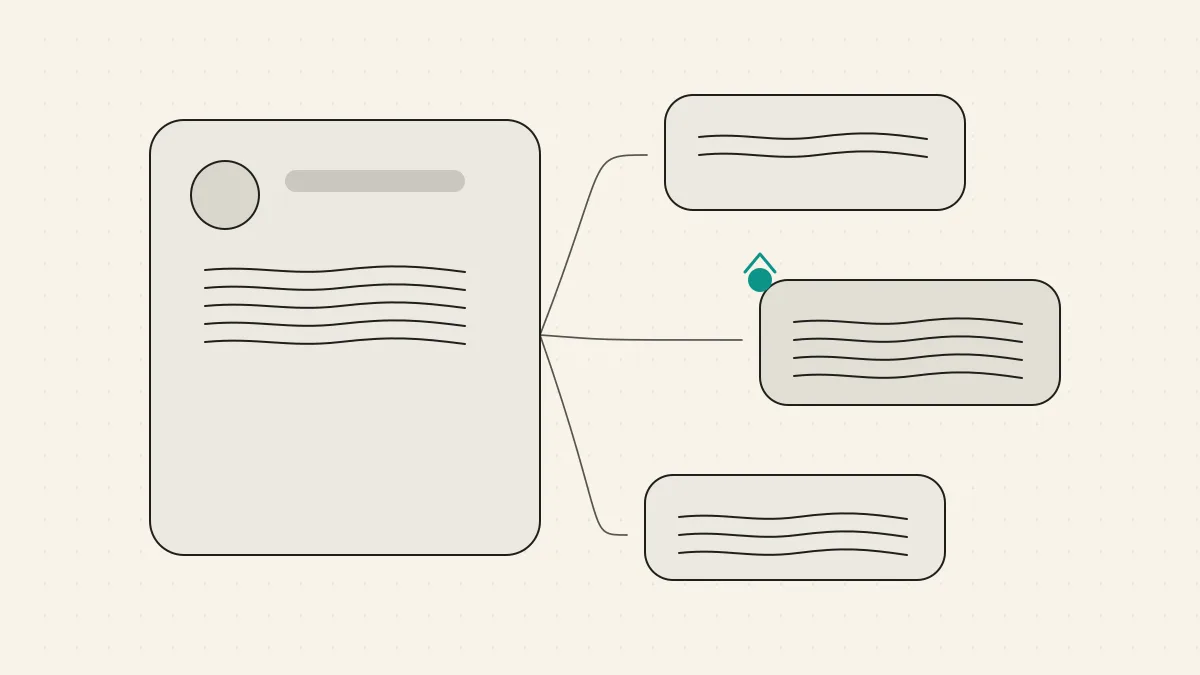
A LinkedIn summary is your profile's About section: explain what you do, who it is relevant to, what evidence supports it and how to contact you. Below are ten original illustrative examples by role. They are not real customer profiles, and their sample results must never become your claims.
Consultants can lead with a client problem, employees with their specialty, and career changers with a credible bridge to the new field. There is no requirement to begin with a provocative hook. If you want a first draft, the About generator can help; it cannot invent your evidence.
TL;DR
- 🪝 Make the opening self-contained. The preview varies by layout; put useful meaning before the expandable portion.
- 🧩 Try role or audience, scope, evidence and a next step. These are optional building blocks to reorder for your goal, not a mandatory conversion formula.
- 🗣️ Write like you talk. A summary that sounds like a human beats one that sounds like a job posting.
- 🔍 Be specific, not impressive. "DTC brands doing $2M to $20M" tells a reader more than "various clients".
- 📏 Treat 2,600 characters as our working counter ceiling. Verify LinkedIn's current editor and remove repetition rather than filling the space.
- 🤝 End with a low-pressure next step. Tell the reader exactly what to do if they are the right person.
What makes a good LinkedIn summary work?
The following four-part shape is an editorial starting point, not a proven conversion formula. Compress or reorder it to fit your role and goal.
On a narrow screen, scroll sideways to read every column.
| Part | What it does | Where it goes |
|---|---|---|
| Role or audience | Names the work or relevant reader | Early, where it makes sense for your goal |
| Outcome | The change you create | First or second paragraph |
| Proof | Why you are believable | Middle |
| Soft CTA | The next step for the right person | Last line |
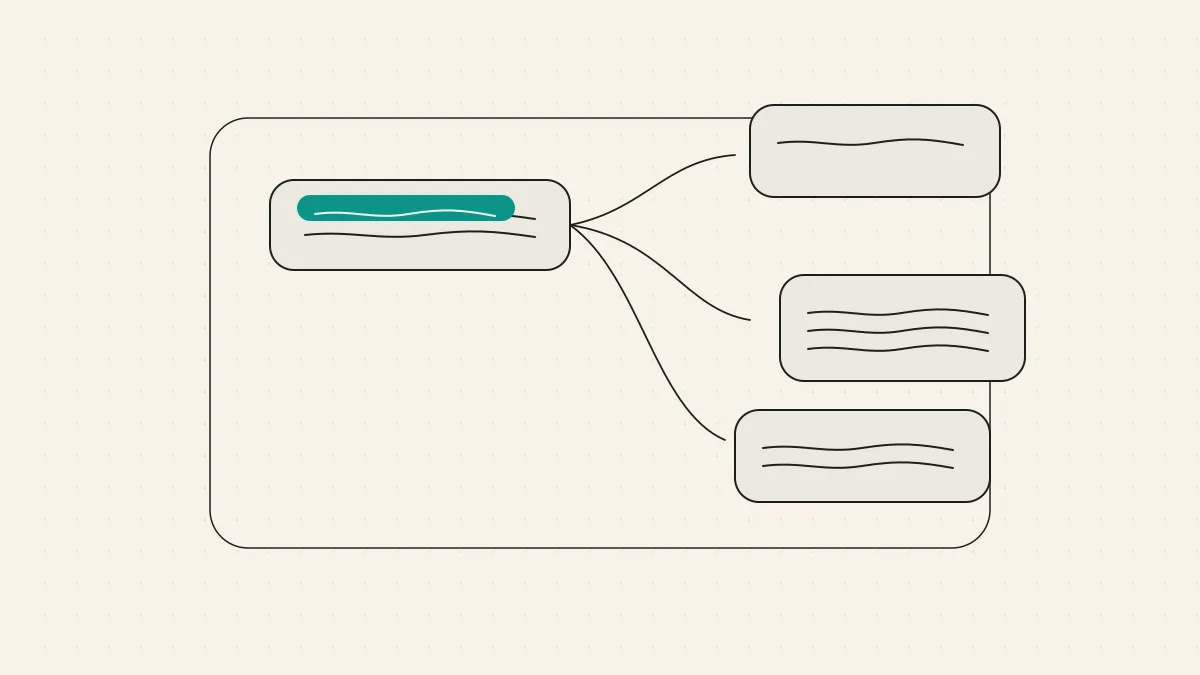
Use an opening that makes sense without expansion. The visible preview varies by layout, so verify it on your own profile. Replace generic self-description with a concrete role, problem or audience; do not assume a provocative hook is required for every professional summary.
What are strong LinkedIn summary examples for consultants and fractional execs?
Independents need the reader to grasp their lane and their proof fast, because the next step is often a paid conversation.
Independent operations consultant (DTC)
Most operations break in the same three places, and by the time a founder calls me, they already know which one is on fire.
I am an independent operations consultant for DTC brands doing $2M to $20M in revenue. I come in for 90 days, find where fulfilment, inventory, and returns are quietly draining margin, and leave your team with a system they can run without me.
Last year my clients cut fulfilment costs by an average of 18%, mostly by fixing process rather than switching vendors. Before consulting, I ran ops for two consumer brands through their fastest growth years, so I have made most of these mistakes on someone else's payroll first.
If your margins are shrinking while revenue climbs, that is usually a solvable ops problem. Send me a message and tell me where it hurts.
Structure: the opening names a problem, followed by audience, outcome, evidence and a next step. The 18% result is fictional. Replace it with a supported result or remove it; a modest-looking number is not evidence.
Fractional CFO
Founders do not usually need more spreadsheets. They need to walk into a board meeting knowing their numbers will hold up under questions.
I work as a fractional CFO for seed to Series B SaaS companies, one or two days a week. I turn a messy finance function into clean models, a real forecast, and reporting your board trusts, without the cost of a full-time hire you are not ready for.
I have been Head of Finance through two acquisitions, so I know which numbers investors actually pressure-test and which ones are noise.
If you have a board meeting coming and a quiet worry about your model, that is exactly the moment to reach out.
Structure: hook reframes the real need, then who + outcome, then proof (the two acquisitions), then a CTA tied to a specific trigger. For a deeper profile walkthrough aimed at independents, see LinkedIn profile for consultants and LinkedIn for consultants.
What are good LinkedIn summary examples for founders and freelancers?
Founders should say what they build before why it matters. Freelancers should name a buyer before listing skills.
Startup founder
Payroll should be boring. For most small businesses across the continent, it is anything but.
I am the co-founder of a company making payroll simple for African SMEs, so a 15-person business can pay its team correctly and on time without a finance department. We started because we watched good companies lose good people over avoidable pay errors.
We are early, and I write here about the unglamorous parts of building this: the compliance edge cases, the trust problem, the days it does not work. Follow along if that is the kind of building you care about.
Structure: a short, opinionated hook, then what we build + for whom + outcome, then honest proof-of-thinking, then a soft CTA to follow rather than buy. Founders often use the summary to grow an audience, so the best AI tools for LinkedIn posts guide pairs well here.
Freelance UX writer
Onboarding can ask a new user to make several unfamiliar decisions. I work on the words that help them understand the next step.
I am a freelance UX writer, and I write the words inside your product: onboarding flows, empty states, error messages, the tiny moments that decide whether someone sticks. I have done it for PLG software teams and more than 30 startups.
If you are reviewing an onboarding flow, message me with the task and where users get stuck. I can confirm whether the copy is within my scope.
Structure: a specific task, then role and illustrative experience, followed by an intake question. The freelancer asks for enough context to assess scope rather than promising that a copy change will solve activation.
What are LinkedIn summary examples for coaches, job-seekers, and career-switchers?
For these roles, choose a recognizable field and evidence appropriate to the next step. You do not need a provocative hook or an exaggerated claim.
Leadership coach
Moving from engineering into management means learning a different kind of work: delegation, feedback and helping other people make decisions.
I coach newly promoted engineering managers through exactly that transition: the delegation that feels like losing control, the 1:1s that go quiet, the imposter feeling at 11pm. I have run more than 200 of these coaching conversations.
Before coaching, I led engineering teams myself and got most of this wrong the first time, which is a large part of why I am good at it now.
If you were just promoted and quietly panicking, that is normal, and it is coachable. Send me a message.
Structure: a hook that makes one reader feel seen, then audience + outcome, then proof and human credibility, then a reassuring CTA.
Job-seeker (open to work)
I ship 0-to-1 products in industries where "move fast and break things" is not an option.
I am a senior product manager with eight years in fintech and healthtech, and I am open to a new role. My strength is taking a vague, regulated, high-stakes problem and turning it into a shipped product that passes both users and compliance.
At my last company I launched a payments feature end to end, from discovery to a release that cleared audit on the first pass.
I am looking for a team building something hard and useful. If that is you, or you know them, I would love an introduction.
Structure: hook leads with value, not availability, then role + outcome + the fact of the search, then a concrete proof point, then a CTA that invites both hirers and connectors.
Career-switcher (nurse to UX researcher)
I spent eight years learning what people actually do under stress, versus what they say they will do. That is user research; I just did it in a hospital first.
I am moving from nursing into UX research, focused on healthcare products, where my clinical background is not a gap on my resume but the reason I understand the user. I recently completed a research certification and have three portfolio projects with real interviews and findings.
I am looking for a team that wants a researcher who has sat with people on their worst day. If your product touches patients or clinicians, let us talk.
Structure: the hook reframes the old career as the qualification, then the bridge + outcome, then recent proof, then a targeted CTA. This is the switcher's core move, and it starts one line earlier in your headline too, which we cover in LinkedIn headline examples.
What are LinkedIn summary examples for ghostwriters, agencies, and technical experts?
Here the summary often speaks to an audience as well as a buyer, so a point of view can lead.
LinkedIn ghostwriter
The fear every founder has about hiring a ghostwriter is that they will end up sounding like a LinkedIn template. So my entire job is to sound like you, only more consistently.
I ghostwrite LinkedIn content for B2B founders. I learn how you actually talk from your voice notes and past posts, then turn your expertise into posts your own team recognizes as yours. I work with a small number of clients at a time, and I never recycle a hook between them.
If posting consistently keeps falling to the bottom of your week, that is the exact problem I solve. Message me and I will send two sample posts in your voice before you commit to anything.
Structure: the opening names the buyer's concern, followed by service, method and a next step. Voice notes are part of this fictional ghostwriter's method. WriteHero's onboarding learns a writing profile from existing LinkedIn posts; it does not promise to learn your style from voice notes.
Technical expert (staff engineer / advisor)
Most "scalability" problems are not about traffic. They are about a decision someone made two years ago that nobody wanted to revisit.
I am a staff engineer specializing in distributed systems, and I advise early-stage teams on architecture before it becomes expensive to unwind. I have spent fifteen years building systems that had to stay up, and I write here about the boring decisions that quietly decide whether a codebase ages well.
If you are pre-Series A and about to make a foundational architecture call, a second opinion is cheap insurance. Reach out, or just follow along for the writing.
Structure: a contrarian hook that shows expertise, then specialty + outcome, then durable proof, then a dual CTA (advise or follow). A strong point of view in line one is what earns the "see more" tap.
LinkedIn summary example for accounting and bookkeeping
I help small service businesses understand their accounts before a filing deadline becomes an emergency.
My work covers bookkeeping, month-end reconciliation and preparing clear records for the accountant handling the return. I explain what a number means, not just where it belongs in a spreadsheet.
If you are choosing support for your business, message me with your location, accounting system and the work you need help with. I will confirm whether it falls within my scope.
This is a fictional example responding to a common accounting-profile task. Add a qualification or jurisdiction only if it is yours. Do not imply you provide licensed tax, legal or audit services when you do not. A specific scope and a clear intake question are stronger than a fabricated cost-saving percentage.
How long should a LinkedIn summary be?
Our counter uses a 2,600-character working ceiling; confirm it in the current About editor. Character-to-word ratios vary. Write enough to resolve the reader's uncertainty, then remove repetition. The opening preview depends on screen and layout, not a reliable universal 220-character rule.
Two practical checks:
- Read only your opening. It should explain a useful role, audience or problem without depending on the expanded profile.
- Confirm you are under the ceiling. Use the character counter for length, then verify the saved profile itself on mobile.
Where to put the summary and check it saved
Open your LinkedIn profile, find About, edit and save. LinkedIn's official About instructions also warn you to edit the correct language profile if changes do not appear. Your headline is a separate field; putting the summary into it is not a shortcut.
After saving, check paragraph breaks, the opening preview and the next step. For a longer draft, move detailed project evidence to Experience or Featured instead of repeating it throughout About.
How do you write your own LinkedIn summary?
Borrow the structure that fits your role, not every phrase or sample result. Explain the work, scope, evidence and next step in the order that makes sense. If a numerical result is not available, a precise description of your work is enough.
A workable order of operations:
- Write the opening line last, once you know your best specific point.
- Draft the middle in the first person, plainly, as if explaining your work to one real person.
- Add one proof or proof substitute you can defend.
- End with a single, low-pressure next step for the right reader.
- Make the opening self-contained, then check the saved profile's actual preview on mobile and desktop.
If the blank box is what stops you, reacting to a draft is easier than writing from nothing. Our LinkedIn About generator produces a first version from a few honest inputs, and you can rewrite it into your own voice from there. When the summary is set, make sure your first line, your headline, matches it, using the worked cases in LinkedIn headline examples.
Related reading
- How to write a LinkedIn bio, the shorter, reusable version of what is here.
- LinkedIn summary examples for job seekers, the same structure tuned for open-to-work, career changers, and recent grads.
- LinkedIn headline examples, the same logic applied to your one-line headline.
- LinkedIn profile for consultants, a full profile walkthrough for independents.
- LinkedIn for consultants, how to turn a profile into client conversations.
- Best AI tools for LinkedIn posts, the buyer's guide by bottleneck.
- LinkedIn About generator, draft a summary from a few honest inputs.
- LinkedIn character counter, check the About length before testing the saved profile layout.
Choose your next step
Frequently asked questions
What should a LinkedIn summary include?
A useful LinkedIn summary explains your work, who it is relevant to, evidence you can support and a next step. First person often works well. Make the opening self-contained, because the expandable preview varies by screen and layout. Invite a message or point to relevant work when that fits your goal.
How long should a LinkedIn summary be?
Our counter uses a 2,600-character About ceiling; verify the current limit in LinkedIn's editor. Word count varies, and the visible preview is not a fixed 220 characters. Use enough space for your role, work, credible evidence and a next step without padding.
Why does the first line of a LinkedIn summary matter so much?
Some profile layouts show an expandable About preview, but its length is not a universal two-line rule. Start with a concrete role, audience or problem so the opening is useful on its own. Check the saved profile on mobile and desktop instead of treating a character count as a layout simulator.
Should a LinkedIn summary be written in first or third person?
First person is a practical choice when you want to address the reader directly. Third person can fit a formal biography. Choose the context that fits your work and keep the voice consistent; this guide does not establish that either form builds trust faster.
How do I write a LinkedIn summary if I am job-seeking or changing careers?
Lead with the value you bring and the role you want, not with the fact that you are looking. For a career switch, open by bridging your old field to the new one so the change reads as an asset, then show recent proof such as projects or certifications. End with a clear, low-pressure call to action inviting hiring managers or recruiters to reach out.
Related guides
Browse Profile ProfileJuly 3, 2026
How to Optimize Your LinkedIn Profile: A Section-by-Section Checklist
A goal-based checklist for your headline, About, photo, Featured work and experience, with evidence and saved-profile checks.
Read more ProfileJuly 3, 2026
LinkedIn Headline Examples: 21 Options by Role
Choose from 21 illustrative headline structures by role, adapt only accurate claims and verify the saved profile on mobile and desktop.
Read more ProfileJuly 3, 2026
How to Write a LinkedIn Bio: Where It Goes and 6 Short Examples
LinkedIn has a headline and an About section, not a separate field called Bio. Write a short introduction for your About, adapt it to your role, and check the saved profile.
Read more
See your first post, in your voice
Paste your LinkedIn profile and WriteHero drafts a post that sounds like you. See it before you sign up, no login needed. Create an account later to save the draft.