How to Write a LinkedIn Recommendation: A Simple 3-Part Structure

Writing a LinkedIn recommendation feels harder than it should. You want to say something warm and true about a colleague, but you open the box and out come the same tired words everyone uses: hardworking, reliable, a pleasure to work with. That version is easy to write and impossible to believe, because it could be about anyone. A recommendation is one of the few things on a profile the person cannot say about themselves, which is exactly what makes a good one worth so much. A stranger reading a profile discounts what the person claims and pays attention to what other people confirm.
The good news is that a recommendation that actually lands is not about better writing, it is about a simple structure you can reuse every time. This guide walks through that three-part shape, shows the before-and-after on each part, names the mistakes that quietly ruin most recommendations, and covers how to ask for one when you are on the other side. If you would rather react to a draft than start from a blank box, our LinkedIn recommendation generator writes a first version from a few honest inputs.
TL;DR
- 🧩 Use three parts: context, a concrete strength, a clear endorsement. In that order, in the first person.
- 🔍 One specific detail beats a paragraph of adjectives. "Rebuilt our onboarding in three weeks" says more than "highly skilled".
- 📏 Keep it to two or three short paragraphs. Longer is not more convincing if the detail is thin.
- 🗣️ Write like you talk. First person, plain voice, no HR template phrasing.
- 🚫 Cut anything that could describe anyone. If "dedicated team player" survives your edit, delete it.
- 🙋 Asking well gets you a better one back. Remind the writer of the context and the strength you want named.
What makes a good LinkedIn recommendation work?
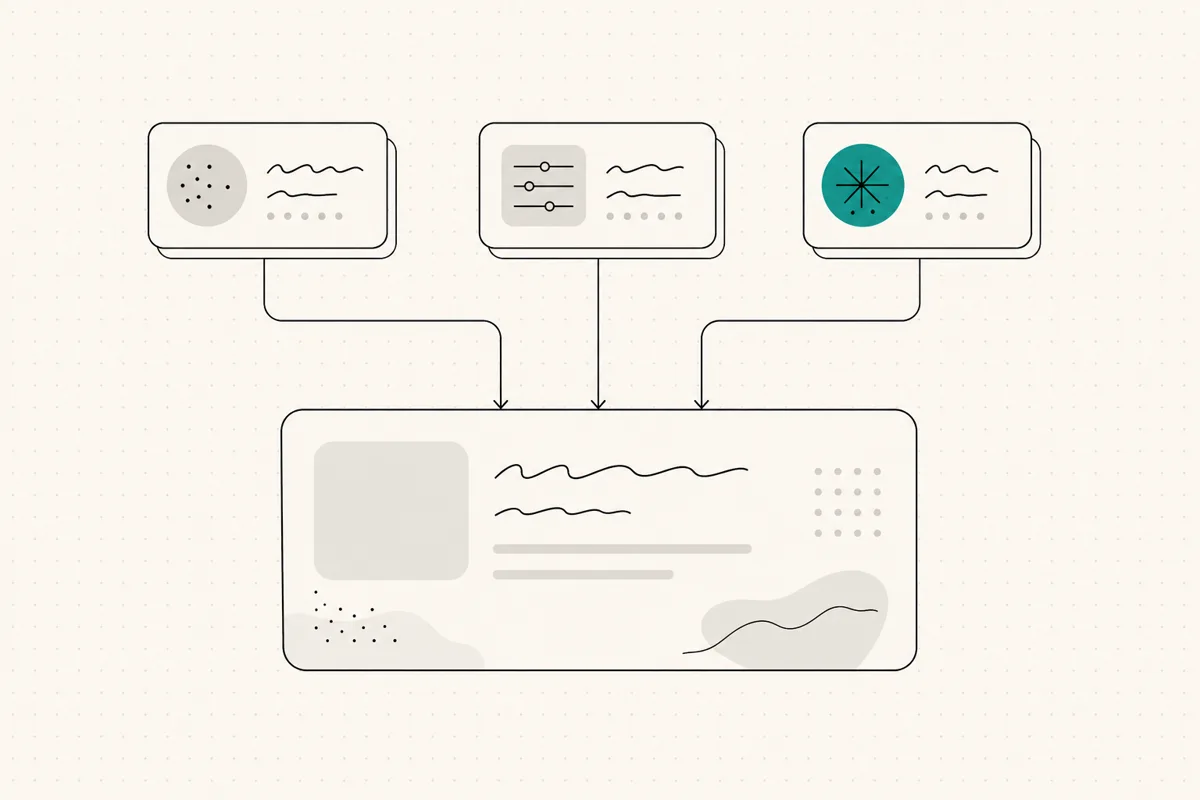
Nearly every recommendation a reader actually believes follows the same three-part shape. You can compress it into one tight paragraph, but all three parts earn their place.
On a narrow screen, scroll sideways to read every column.
| Part | What it does | Where it goes |
|---|---|---|
| Context | How you worked together, and your standing to speak | Opening line |
| Concrete strength | One or two real examples, not adjectives | Middle |
| Endorsement | The plain, confident close | Last line |
The part people skip is the middle. It is tempting to reach for "dedicated", "passionate", and "results-driven", but those are the words every weak recommendation uses, so a reader glides past them. Replace one adjective with one thing the person actually did and the whole recommendation changes character. Let us take the three parts one at a time.
Part 1: Open with the context and your relationship
Start by telling the reader how you worked together and for how long. This is not throat-clearing; it is what gives your word weight. A recommendation from a manager, a peer, and a client each carry a different kind of credibility, so name yours in the first line. The reader decides how much to trust the rest based on where you were standing when you saw the person work.
Before: "I have known Maya for a long time and she is fantastic."
After: "Maya and I worked together on the customer success team, where I saw her handle both renewals and the difficult calls nobody else wanted."
The second version tells the reader the relationship, the length, and your standing to speak, all in one line, and it earns the praise that follows. The first version could have been written by a stranger.
Part 2: Show one or two specific strengths through a real moment
This is the middle, and it is the part that does the work. Instead of listing traits, pick one real moment that shows the strength in action. The story of a single thing the person did is worth ten adjectives, because a reader cannot picture "detail-oriented" but can picture someone catching a mistake nobody else flagged. If you have a second, quieter strength, add it, especially the unglamorous kind that signals you were paying attention.
Before: "She is a great problem solver, very reliable, and always goes above and beyond."
After: "When a renewal was at risk, Maya did not hide behind the account plan. She called the customer, found the real blocker, brought product into the conversation, and turned a likely cancellation into a calm next step. What I trust most about her is that she keeps people steady when the room gets tense."
The after version names no adjectives at all, yet it makes Maya sound more capable than any string of them could. Do reach for the specific project, the actual result, or the moment things went wrong and the person stayed steady. Do not settle for a trait you could paste onto someone else.
Part 3: Close with a clear endorsement
End by saying plainly what you would do again. This is where you drop any hedging. A recommendation that trails off with "I wish her all the best" reads as polite; one that says "I would hire her again tomorrow" reads as certain. The strongest endorsements are concrete actions: hire them, work with them, start another company with them, recommend them without hesitation.
Before: "I wish her all the best in her future endeavors."
After: "I would work with Maya again without hesitation. If your team needs someone who can bring order to messy customer conversations, talk to her first."
Put together, those three parts make a complete recommendation in three short paragraphs. Here is a second short example in a different relationship, a client writing for a consultant, so you can see the same skeleton hold:
I hired Jordan to clean up our onboarding emails after months of small fixes that never added up.
He did the part we kept avoiding: interviewed support, read the tickets, and found where new customers were getting confused. The final emails were shorter, clearer, and much easier for our team to maintain.
I would hire Jordan again, and I would recommend him to any team that needs sharper copy without drama.
Context, a concrete moment, then a personal endorsement. For six more worked samples across relationships, from manager to report, client to freelancer, and professor to student, see LinkedIn recommendation examples.
Common mistakes that make a recommendation forgettable
Most weak recommendations fail in one of four predictable ways. Each has a simple fix.
- Vague adjectives. "Hardworking, reliable, a great team player" could describe half the people you have ever worked with. Replace one adjective with one thing the person actually did, and the sentence starts meaning something.
- Generic praise with no proof. Saying someone is "an amazing leader" asks the reader to take your word for it. Showing a moment they led, cut a bloated request list and took the heat for it, lets the reader conclude it themselves, which is far more convincing.
- Too long. A recommendation is not more persuasive because it is longer. A single specific detail beats a paragraph of superlatives. If a sentence adds no new information, cut it, and stop at two or three short paragraphs.
- Writing in the third person. "Maya is a dedicated professional who consistently delivers" sounds like an HR reference letter, not a person who knows her. Write "I worked with Maya" and "I would hire her again". First person is what makes it read as true.
If you run your draft through those four checks and something survives that could describe anyone, delete it. The recommendation gets shorter and stronger at the same time.
How to ask for a LinkedIn recommendation
When you are the one asking, your job is to make it easy to say yes. Most people want to help but freeze at the blank box, so remove that friction. Send a short, direct message that reminds the person how you worked together, names one or two strengths you would love them to speak to, and points at a specific project they might reference. That context is not putting words in their mouth; it saves them the hardest part and gives them a running start.
You can go one step further and offer to draft it. Many busy people will happily approve a version you have written, then edit it into their own voice, and both of you get a better result than a recommendation that never gets written. Offer the draft as a starting point, make clear they should change anything that does not sound like them, and thank them either way. If the draft is what stalls you, our LinkedIn recommendation generator produces a first version from a few honest inputs that you can hand over or rewrite.
The same specificity that makes a recommendation land is what makes the rest of a profile work. A recommendation points a reader back at your About section and the one line that sits above everything else, your headline, so it is worth making those match the credibility a good recommendation lends you.
Your LinkedIn writing should sound like you. Recommendations help other people say what makes you credible. WriteHero helps you write the rest of your profile and posts in a voice that still feels like yours. Start free
Related reading
- LinkedIn recommendation examples, six copy-paste samples across relationships with each one broken down.
- LinkedIn recommendation generator, draft a recommendation from a few honest inputs.
- LinkedIn About generator, write the About section a strong recommendation points back to.
- LinkedIn headline generator, sharpen the one line that sits above everything else.
Choose your next step
Frequently asked questions
How do you write a good LinkedIn recommendation?
Follow three parts in order. Open with the context of how you worked together, so a reader knows why your word counts. In the middle, name one or two concrete strengths shown through a real moment rather than a list of adjectives. Close with a plain endorsement of what you would do again, such as hire, work with, or recommend the person. Write it in the first person and keep it to two or three short paragraphs.
How long should a LinkedIn recommendation be?
Two to three short paragraphs is plenty. A longer recommendation is not more convincing, because a single specific detail carries more weight than a paragraph of praise. Say how you worked together, give one concrete example of the person's strength, and close with a clear endorsement. If a sentence could describe anyone, cut it.
Should a LinkedIn recommendation be written in first or third person?
First person, always. A recommendation is your personal testimony about someone, so it should read like you talking, using 'I worked with' and 'I would hire her again'. Third person makes it sound like a template or an HR reference letter, which is exactly the impersonal tone that makes a recommendation forgettable.
How do I ask someone for a LinkedIn recommendation?
Ask directly and make it easy to say yes. Send a short message reminding the person how you worked together, name one or two strengths you would love them to speak to, and mention any project you would like referenced. Offering that context is not putting words in their mouth; it saves them the blank page, and you can always ask them to adjust it.
What is the biggest mistake in a LinkedIn recommendation?
Generic praise. Words like 'hardworking', 'dedicated', and 'great team player' could describe anyone, so a reader's eyes slide right past them. The fix is not more praise, it is more specificity: replace one adjective with one thing the person actually did, and the whole recommendation changes character.
Can I edit a LinkedIn recommendation someone wrote for me?
You cannot edit the text yourself, but you control whether it appears on your profile. When someone submits a recommendation you can accept it, hide it, or ask the person to revise it. If a recommendation is vague or has an error, it is fine to message the writer, thank them, and politely ask for a small change before it goes live.
Related guides
Browse Writing WritingJuly 3, 2026
How to Write a LinkedIn Post That Sounds Like You
A practical guide to writing LinkedIn posts that earn attention without sounding generic: hook, body, takeaway, voice, formatting, and final checks.
Read more WritingOctober 3, 2026
How to Schedule LinkedIn Posts and Find Scheduled Posts
A practical guide to LinkedIn's native scheduler, including where scheduled posts live, how to edit them, and what to check when the clock or a post is missing.
Read more- WritingOctober 3, 2026
LinkedIn Drafts: Where to Find, Save and Recover Your Post
Post drafts and article drafts live in different places. Find the right one, keep a safe copy, and avoid discarding work while looking for a scheduled post.
Read more
See your first post, in your voice
Paste your LinkedIn profile and WriteHero drafts a post that sounds like you. See it before you sign up, no login needed. Create an account later to save the draft.