LinkedIn Recommendation Examples: 6 Samples You Can Copy and Adapt

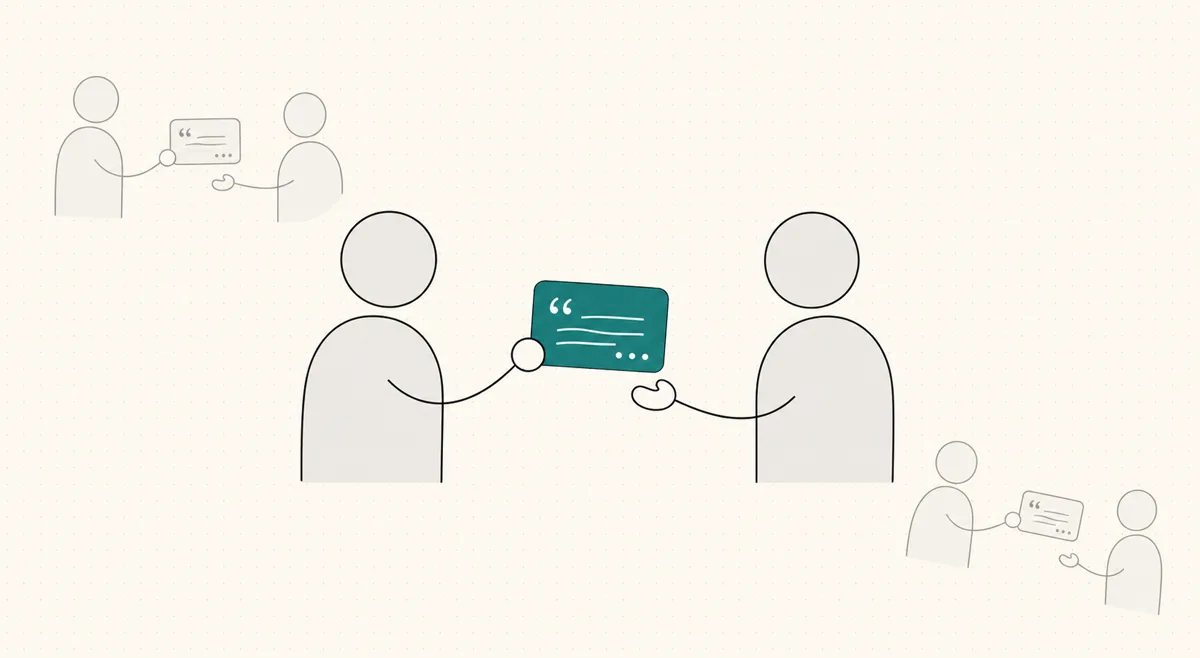
A LinkedIn recommendation is a short, public testimonial one person writes for another, shown on the recommended person's profile. It is one of the few things on LinkedIn you cannot write about yourself, which is exactly what makes it worth something. A stranger reading your profile discounts everything you say and pays attention to what other people say about you.
The trouble is that most recommendations sound the same. "It was a pleasure working with X. She is hardworking, reliable, and a great team player." That could be about anyone, so it convinces no one. Examples help because the fix is rarely more praise, it is more specificity, and it is easier to see what specific looks like than to invent it from a blank box. Below are six copy-paste LinkedIn recommendation examples, one per common relationship, each written in the recommender's own voice and then broken down by its parts. Any names, numbers, and projects are placeholders to show the shape of a real detail, not claims about real people. If you would rather react to a draft than start from nothing, our LinkedIn recommendation generator writes a first version from a few honest inputs.
TL;DR
- 🧩 Use three parts: context, a concrete strength, a clear endorsement. In that order, in the first person.
- 🔍 One specific detail beats a paragraph of adjectives. "Rebuilt our onboarding in three weeks" says more than "highly skilled".
- 📏 Keep it to two or three short paragraphs. Longer is not more convincing if the detail is thin.
- 🗣️ Write like you talk. A recommendation that sounds like a real person beats one that sounds like an HR template.
- 🙋 Ask well and you get a better one back. Remind the writer of context and the strength you want named.
- 🤝 Close with a plain endorsement. Say what you would do again: hire, work with, recommend without hesitation.
What makes a good LinkedIn recommendation work?
Nearly every recommendation that a reader actually believes follows the same three-part shape. You can compress it into one tight paragraph, but all three parts earn their place.
On a narrow screen, scroll sideways to read every column.
| Part | What it does | Where it goes |
|---|---|---|
| Context | How you worked together, and your standing to speak | Opening line |
| Concrete strength | One or two real examples, not adjectives | Middle |
| Endorsement | The plain, confident close | Last line |
The part people skip is the middle. It is tempting to reach for words like "dedicated", "passionate", and "results-driven", but those are the words every weak recommendation uses, so a reader's eyes slide right past them. Replace one adjective with one thing the person actually did and the whole recommendation changes character. Now the examples.
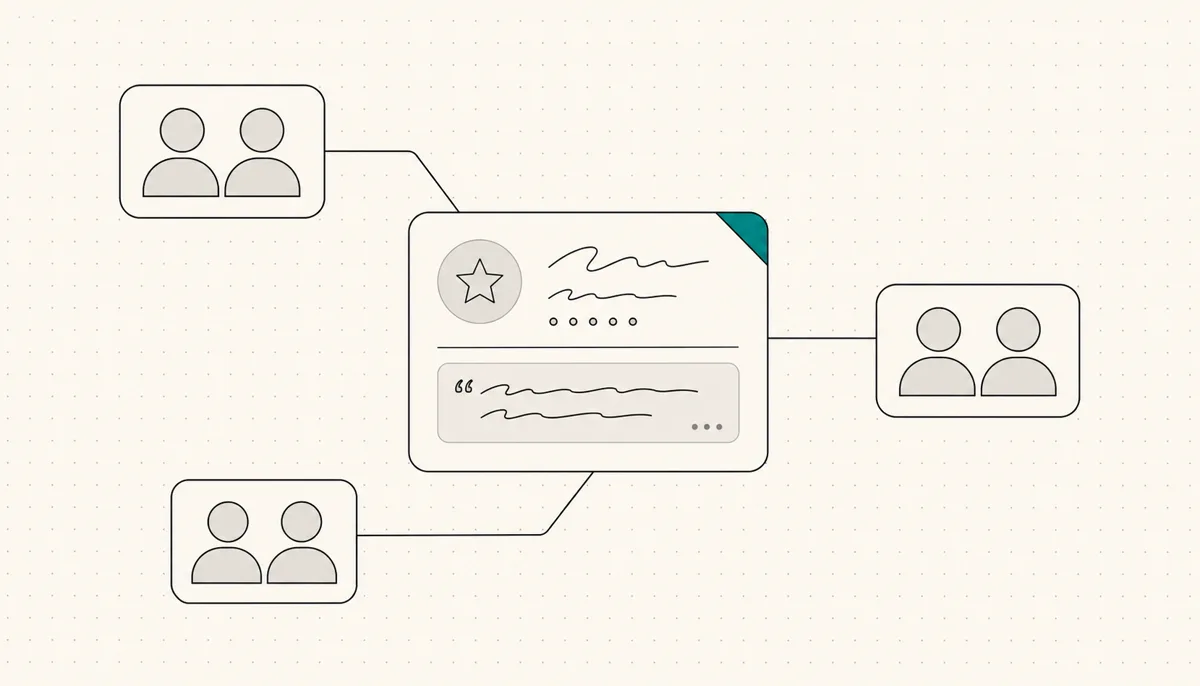
What is a good LinkedIn recommendation from a manager to a direct report?
A manager's recommendation carries weight because it comes from the person who set the bar. Use that standing: name the growth or the moment you would not have expected.
Priya reported to me for two years on the growth team, and she is one of a small handful of people I would rehire in a heartbeat.
When our onboarding funnel started leaking users, I asked Priya to look into it as a side project. She came back a week later not with a slide deck but with a rebuilt flow, a clear before-and-after, and a test plan. Activation went up and stayed up. What I trust most about her is that she owns the boring middle of a problem, the part where most people lose interest.
Any team would be lucky to have her. If you are hiring for someone who can take a vague problem and quietly turn it into a shipped result, talk to Priya first.
Structure: context (how long, what standing), then one concrete strength shown through a real project rather than named, then a plain endorsement. Notice the praise is specific enough that it could not be copied onto someone else.
What is a good LinkedIn recommendation from a direct report to a manager?
Writing up is harder because you want to sound sincere, not like you are angling for something. The move is to credit a specific thing your manager did that made your work better.
I worked under Marcus for three years as a designer on his product team, and he is the manager who taught me the difference between being busy and being useful.
Marcus protected our focus in a way I have rarely seen since. When leadership piled on requests, he was the one who pushed back, cut the list to what mattered, and took the heat so the team did not have to. He also gave feedback that was direct without being unkind, which sounds simple and almost never is.
I grew more under Marcus than in any role before or since. Anyone who gets to work for him should count themselves fortunate.
Structure: context (your role, how long), then a specific leadership behavior with a concrete situation, then a warm endorsement. The detail about pushing back on leadership is what makes it read as true rather than dutiful.
What is a good LinkedIn recommendation from a peer to a coworker?
Peer recommendations are believable precisely because there is no power dynamic. Lean into that: speak to what the person is like to actually work alongside.
Sofia and I sat on the same engineering team for about four years, shipping features side by side, so I have seen how she works when things go well and when they very much do not.
The night before a major launch, a core service started failing and half the team was ready to roll back. Sofia stayed calm, traced it to a config change nobody had flagged, and had it fixed before the deadline. She is also the person who writes the documentation everyone else relies on, the thankless work that keeps a team from repeating its own mistakes.
I would work with Sofia again without a second thought, and I have recommended her to more than one friend who was hiring.
Structure: context (peers, how long, breadth of what you saw), then a concrete moment plus a second quieter strength, then a personal endorsement. The "when things do not go well" framing signals honesty.
What is a good LinkedIn recommendation from a client to a freelancer or agency?
A client recommendation is close to a review, so it should answer the question the next client is silently asking: was hiring this person worth it, and would you do it again?
We hired Daniel to rebuild our marketing site after two other freelancers left us with half-finished work, so I came in skeptical.
He was the opposite of the experience we had before. Daniel scoped the project honestly, told us up front which of our requests were a bad idea, and delivered on the date he promised. The new site loads faster, and our demo requests went up in the first month. What I valued most was that I never had to chase him for an update.
We have already hired Daniel for a second project. If you are on the fence about working with him, do not be.
Structure: context (why you hired, starting from doubt), then concrete outcomes plus a working-relationship detail, then the strongest possible endorsement, a repeat hire. Opening from skepticism makes the praise land harder. For the freelancer being recommended, a strong profile does the rest of the work, and a sharp one-liner up top matters as much as the recommendation, which is where the LinkedIn headline generator helps.
What is a good LinkedIn recommendation from a professor to a student?
Academic recommendations tend toward the formal and forgettable. The fix is the same as everywhere else: one specific thing this student did that the others did not.
Aisha took two of my graduate courses in statistics and worked as my research assistant for a year, so I have seen her both in a classroom of ninety and one on one.
Most students learn the method and stop. Aisha kept asking why the method worked, and twice she caught assumptions in a dataset that I had missed. Her final project reanalyzed a public health study and reached a more careful conclusion than the original authors, which I now use as an example for later cohorts.
She has the rare mix of rigor and curiosity that makes a genuine researcher. I recommend her without reservation, and I expect to be reading her published work before long.
Structure: context (courses, research, the range of settings you saw her in), then a concrete intellectual strength with a real example, then a confident endorsement about the future. The caught-assumptions detail is what separates it from a form letter.
What is a good LinkedIn recommendation from a business partner to a partner?
Partner-to-partner recommendations are about trust under pressure, since a partner has seen you make hard calls with real stakes. Say what you learned about the person when it counted.
Tom and I co-founded a company together and ran it side by side for five years, through a fundraise, a near-miss with running out of cash, and eventually a clean exit.
You learn who someone is when the money is tight, and Tom is the person I want in the room then. During our hardest quarter he took a pay cut before asking anyone else to, and he told our investors the uncomfortable truth when it would have been easier to spin it. He is also relentlessly fair, the kind of partner who makes sure a deal is good for both sides, not just his.
I would start another company with Tom tomorrow. There is no higher recommendation I can give.
Structure: context (co-founders, the range of what you survived together), then character shown through a specific hard moment, then the ultimate endorsement, doing it all again. Money-tight honesty is the detail that cannot be faked.
How do you write your own LinkedIn recommendation?
Do not copy an example word for word; borrow its skeleton. Take the three parts, context, one or two concrete strengths, a clear endorsement, and fill them with what is actually true about the person.
A workable order of operations:
- Open with how you worked together and for how long, so a reader knows why your word counts.
- Pick one real moment, not a list of traits. The story of one thing they did is worth ten adjectives.
- Add a second, quieter strength if you have one, especially the unglamorous kind that says you paid attention.
- Close with a plain endorsement: what you would do again, whether that is hire them, work with them, or recommend them without hesitation.
- Cut every word that could describe anyone. If "dedicated team player" survives your edit, delete it.
If you are the one asking for a recommendation, make it easy on the writer. Remind them of the specific project and the strength you would love them to speak to, then let them make it their own. And if you are staring at a blank box trying to write one for someone else, reacting to a draft is easier than starting cold. Our LinkedIn recommendation generator produces a first version from a few honest inputs that you can rewrite in your own voice. The same specificity that makes a recommendation land is what makes the rest of a profile work too, from the About section down.
Your LinkedIn writing should sound like you. Recommendations help other people say what makes you credible. WriteHero helps you write the rest of your profile and posts in a voice that still feels like yours. Start free
Related reading
- How to write a LinkedIn recommendation, the 3-part structure behind every example above.
- LinkedIn summary examples, the same specific-beats-generic logic applied to your About section.
- LinkedIn recommendation generator, draft a recommendation from a few honest inputs.
- LinkedIn headline generator, sharpen the one line that sits above everything else.
- LinkedIn About generator, write the About section a strong recommendation points back to.
Choose your next step
Frequently asked questions
What should a LinkedIn recommendation include?
A strong LinkedIn recommendation has three parts: the context of how you worked together, one or two concrete strengths backed by a real example, and a clear endorsement of the person. Write it in the first person, keep it to two or three short paragraphs, and name a specific moment rather than listing adjectives like 'hardworking' or 'reliable' that could describe anyone.
How long should a LinkedIn recommendation be?
Most effective LinkedIn recommendations are two to three short paragraphs. Long recommendations are not more convincing; a single specific detail carries more weight than a paragraph of praise. Say how you worked together, give one concrete example of the person's strength, and close with a plain endorsement.
How do I ask someone for a LinkedIn recommendation?
Ask directly and make it easy to say yes. Send a short message reminding the person how you worked together, name one or two strengths you would love them to speak to, and mention any project you would like them to reference. Offering that context is not putting words in their mouth; it saves them the hardest part, which is the blank page, and you can always ask them to adjust.
Should I write a LinkedIn recommendation in first or third person?
First person, always. A LinkedIn recommendation is your personal testimony about someone, so it should read like you talking, using 'I worked with' and 'I would hire her again'. Third person makes it sound like a template or a reference letter written by HR, which is exactly the impersonal tone that makes a recommendation forgettable.
Can I edit a LinkedIn recommendation someone wrote for me?
You cannot edit the text yourself, but you control whether it appears on your profile. When someone submits a recommendation you can accept it, hide it, or ask the person to revise it before it goes live. If a recommendation is vague or has an error, it is fine to message the writer, thank them, and politely ask for a small change.
How many LinkedIn recommendations should I have?
There is no magic number, but a handful of specific recommendations from different relationships, such as a manager, a peer, and a client, is more persuasive than a dozen generic ones. Variety matters more than volume: recommendations that speak to different strengths and contexts give a reader a fuller, more believable picture than repeated praise for the same trait.
Related guides
Browse Writing WritingJuly 3, 2026
How to Write a LinkedIn Post That Sounds Like You
A practical guide to writing LinkedIn posts that earn attention without sounding generic: hook, body, takeaway, voice, formatting, and final checks.
Read more WritingOctober 3, 2026
How to Schedule LinkedIn Posts and Find Scheduled Posts
A practical guide to LinkedIn's native scheduler, including where scheduled posts live, how to edit them, and what to check when the clock or a post is missing.
Read more- WritingOctober 3, 2026
LinkedIn Drafts: Where to Find, Save and Recover Your Post
Post drafts and article drafts live in different places. Find the right one, keep a safe copy, and avoid discarding work while looking for a scheduled post.
Read more
See your first post, in your voice
Paste your LinkedIn profile and WriteHero drafts a post that sounds like you. See it before you sign up, no login needed. Create an account later to save the draft.